
Meta Blocked Our Client’s Core Conversion Event.
Here’s What We Built in 48 Hours.


By Gamal, Founder of Gambra Digital
Meta blocked our client’s purchase event from optimization.
Not because of a tracking error. Not because the pixel was broken. Not because the data was bad.
Because of a platform-level policy that most agencies never encounter. And when they do, they don’t know how to route around it.
Here’s the full story, and the infrastructure we built to solve it. Start to finish, 48 hours.
The Client Situation
A health and wellness startup in the UAE. Funded. Running paid media on Meta. Booking volume was the north star metric. They needed people to complete a booking after seeing an ad.
On the surface it looked like a standard funnel. Drive clicks, fire a Purchase event on the confirmation page, optimize the campaign toward that event.
In practice it was completely blocked.
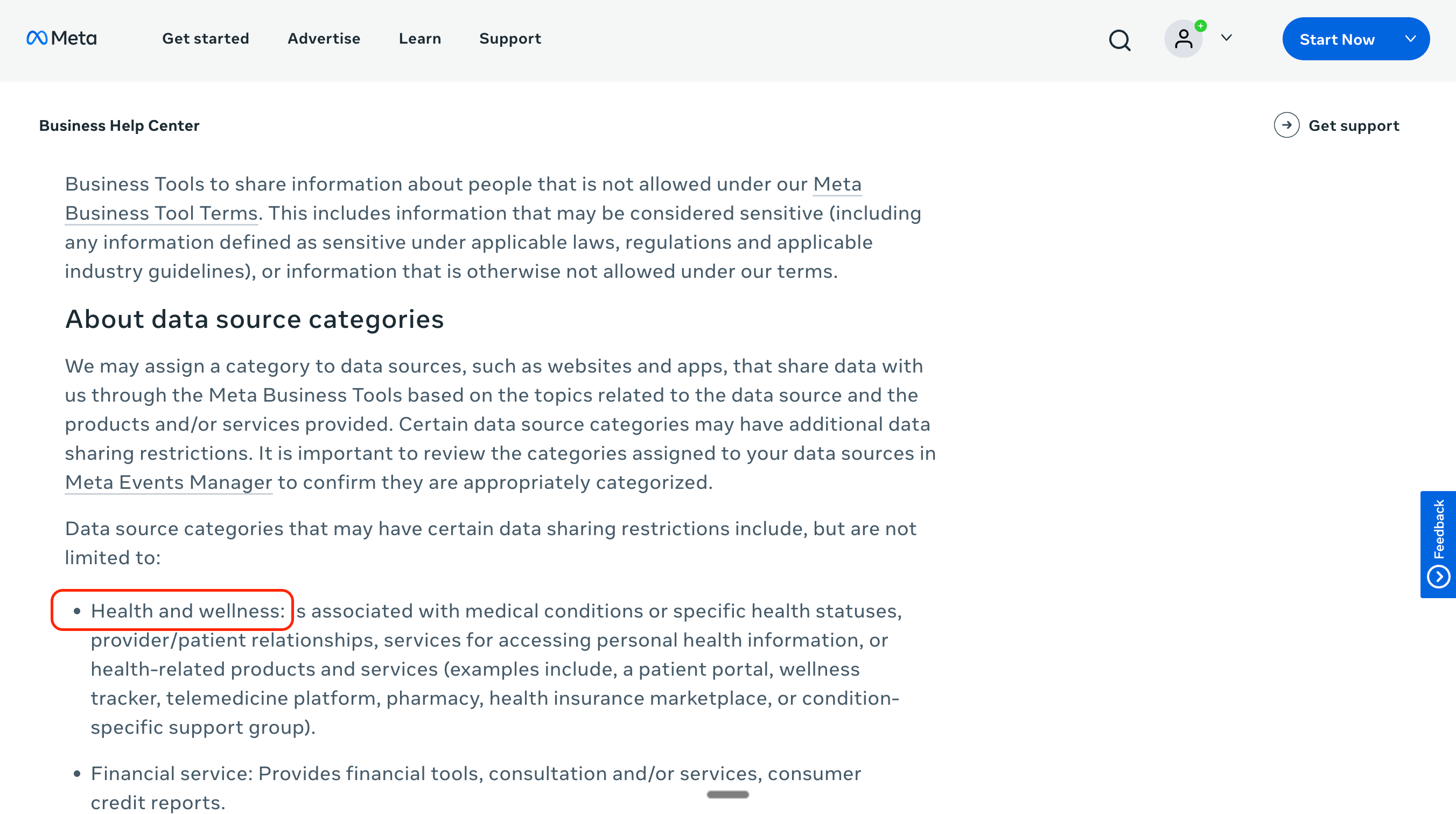
Meta classifies health and wellness brands under a tiered sensitivity framework. Tier 2 covers categories like mental health, therapy, and wellness services. Under this classification, Meta restricts which events advertisers can use for conversion optimization.
Purchase is on the restricted list. So is InitiateCheckout.
The moment you try to optimize a campaign toward those events on a Tier 2 pixel, Meta silently refuses. You can create the campaign. You can set the objective. The campaign runs. But it never actually optimizes. The event data exists in your pixel, you can see it in Events Manager, but the algorithm cannot use it to find buyers.
Most agencies would look at this and think it’s a tracking problem. It’s not. It’s a policy problem. And that distinction matters enormously for how you solve it.
What Doesn’t Work
The first instinct when tracking looks wrong is to improve the tracking. Set up CAPI. Improve event match quality. Add more customer signals.
We ruled all of this out within the first few hours.
CAPI, the Conversions API, sends event data server-side directly from your server to Meta, bypassing the browser entirely. It improves data quality, match rates, and resilience against ad blockers. But it doesn’t change the event type. If you send a Purchase event via CAPI, Meta still reads it as a Purchase event. The same Tier 2 restriction applies.
There is no technical implementation of CAPI that bypasses a policy-level restriction. The data arrives with better match quality and then hits the same wall.
Data sanitization doesn’t help either. Stripping PII, adding consent signals, running through a clean room. None of that changes the event classification. The restriction is on the event name, not the data attached to it.
This is what most teams miss. They keep trying to fix the tracking when the real problem is the event type.
The Solution We Built
The fix was to change what event Meta sees, without changing what any other platform sees.
Meta does not restrict the Lead event under Tier 2. Lead is not classified as a health transaction, so it can be used for conversion optimization on a restricted pixel.
The approach was to intercept the Purchase event before it reaches Meta and remap the event name to Lead. Every other platform, GA4 and any future analytics tool, continues to receive the Purchase event unchanged. Only Meta gets Lead.
Here’s how we built it.
Layer 1: Client-side GTM
The booking confirmation fires on a single URL, the assessment success page. We had an existing browser-side pixel tag firing a Purchase event. We added a parallel tag firing a Lead event with the content name “Booking Confirmed.” This gives us a browser-side backup for the Lead signal.
We also added a tag to capture the fbclid parameter as a first-party cookie. When someone clicks a Meta ad, their URL contains a Facebook click ID. If you don’t capture it immediately, it’s gone the moment they navigate. That click ID stored as a first-party cookie significantly improves CAPI event match quality. Meta can tie the server-side event back to the specific ad click.
Layer 2: Server-side GTM via Stape
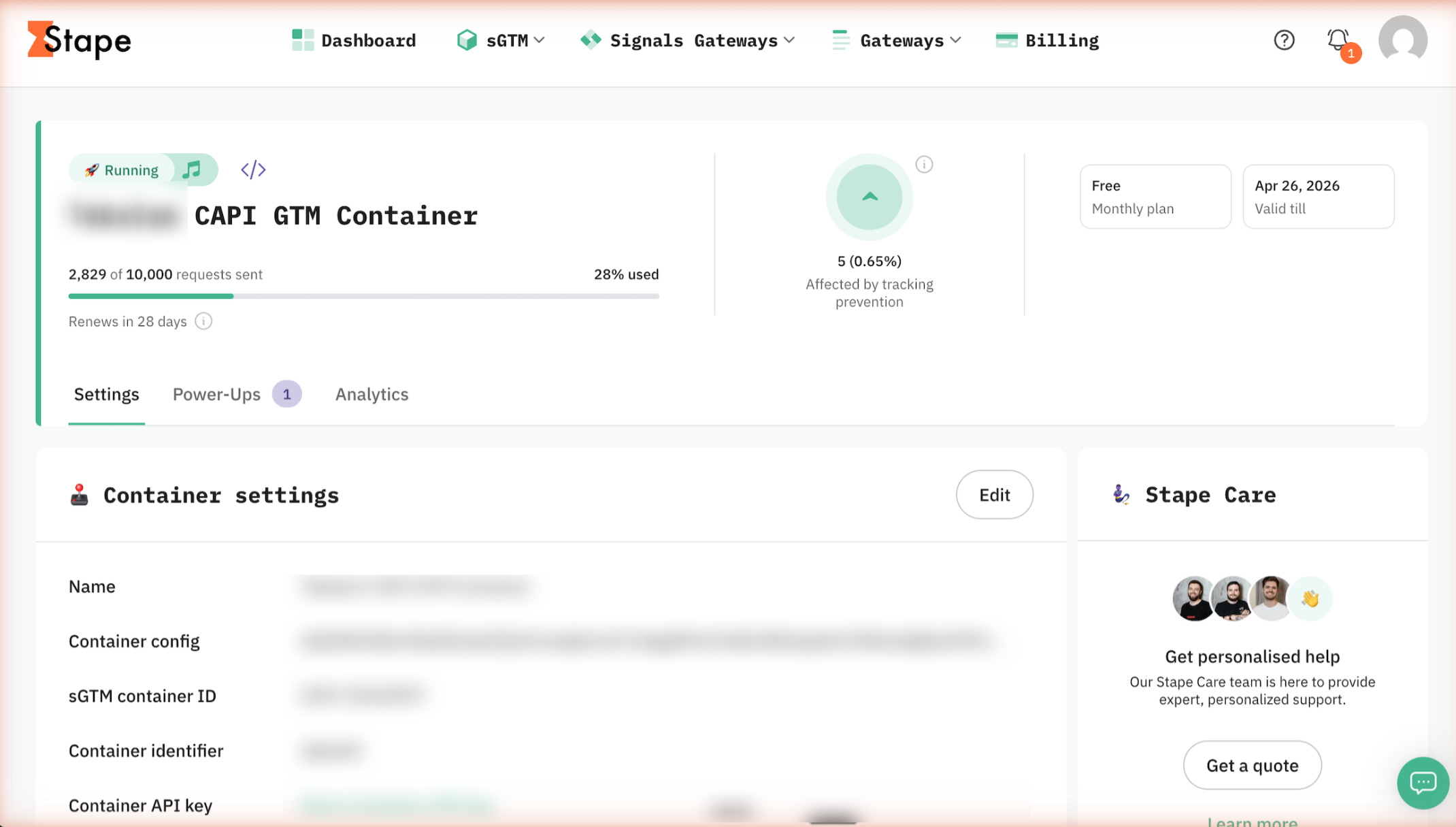
We run a server-side Google Tag Manager container hosted on Stape. When the browser fires the dataLayer push for a confirmed booking, the event travels from the browser to our server container before going anywhere near Meta’s servers.
Inside the server container, we configured a Transformation. It’s a GTM feature that intercepts events in flight and modifies their parameters. The Transformation is scoped specifically to the CAPI tag and fires on one condition: Event Name equals purchase.
When that condition is met, it overwrites the event name to Lead before the data leaves our server for Meta.
GA4 receives the event before the Transformation applies. So GA4 sees purchase. Meta sees Lead. Same booking event. Same data. Two different names, routed based on the destination.
Layer 3: Custom Domain for First-Party Data
The server container lives at a custom subdomain under the client’s own domain. This matters more than most people realize.
When a server container runs under a third-party domain like the default Stape subdomain, browsers treat the cookies it sets as third-party. Safari’s ITP caps those cookies at 7 days. Firefox does the same. That 7-day window is shorter than most purchase consideration cycles, which means you’re losing attribution data on anyone who takes more than a week to convert.
By routing the server container through a subdomain the client owns, the cookies become first-party. Browser restrictions don’t apply. Cookie lifetime goes back to 90 days. The data we’re collecting, click IDs, session identifiers, user signals, lives under the client’s domain. They own it. We manage it.
That’s not a minor technical detail. It’s the difference between a tracking setup that degrades over time and one that holds up as browsers get more restrictive.
48 Hours, Not 3 Months
This is where I want to be direct about something.
A traditional agency would have escalated this to a tracking specialist. That specialist would have opened a ticket. Someone would have scheduled a call to scope the work. A proposal would have been drafted. By the time anything got built, you’re looking at weeks, maybe months, and the client is still running campaigns that the algorithm can’t optimize.
That’s not how we operate.
We diagnosed this on day one. We built the solution on day two. We did it by working directly with the client’s tech lead, explaining exactly what DNS change was needed, why it was needed, and what we were doing on our side in parallel. No hand-offs, no waiting for approvals across three departments, no agency layers slowing the process down.
The reason this is possible is not because we work faster for the sake of it. It’s because when your lead is someone who has been inside ad accounts and tracking stacks for 14 years, they already know what the answer is before the scoping call ends. They’re not researching the problem. They’re implementing the solution.
Senior-led means the person diagnosing your problem is the same person building the fix. No translation layer between strategy and execution.
Where We Are Now
The system is live. Events are flowing through the server container. The custom domain is active and first-party cookies are being set correctly.
The next step is completing a real test booking to confirm the Lead event appears in Meta Events Manager as expected. Once confirmed, we switch the campaign optimization objective from Purchase to Lead. That’s when the actual performance impact kicks in.
We’re also rebuilding Meta lookalike audiences from Lead data going forward. The Lead dataset is cleaner, larger, and unencumbered by policy restrictions.
The Bigger Point
This setup, server-side GTM, event remapping, custom domain, CAPI, isn’t just a workaround for a restricted pixel. It’s what a serious tracking stack looks like in 2025.
Ad blockers affect between 30% and 40% of desktop traffic in some MENA markets. Safari ITP degrades attribution data for anyone on Apple devices. Meta’s policy framework is only getting more restrictive, not less.
The brands that win on paid media in the next two years won’t necessarily be the ones with the biggest budgets. They’ll be the ones with the cleanest data pipelines.
If you’re in health, wellness, finance, or any regulated category running Meta ads, check your event classification. You may be feeding the algorithm data it’s not allowed to use and wondering why performance has plateaued.
It’s not always the creative. Sometimes it’s the event name.
Gambra Digital is a performance marketing agency for funded startups in MENA. We work retainer-only. If you’re scaling paid media across UAE, KSA, Qatar or Kuwait and want senior-level implementation, not account management, you can reach me directly.